Beyond Silvermoon
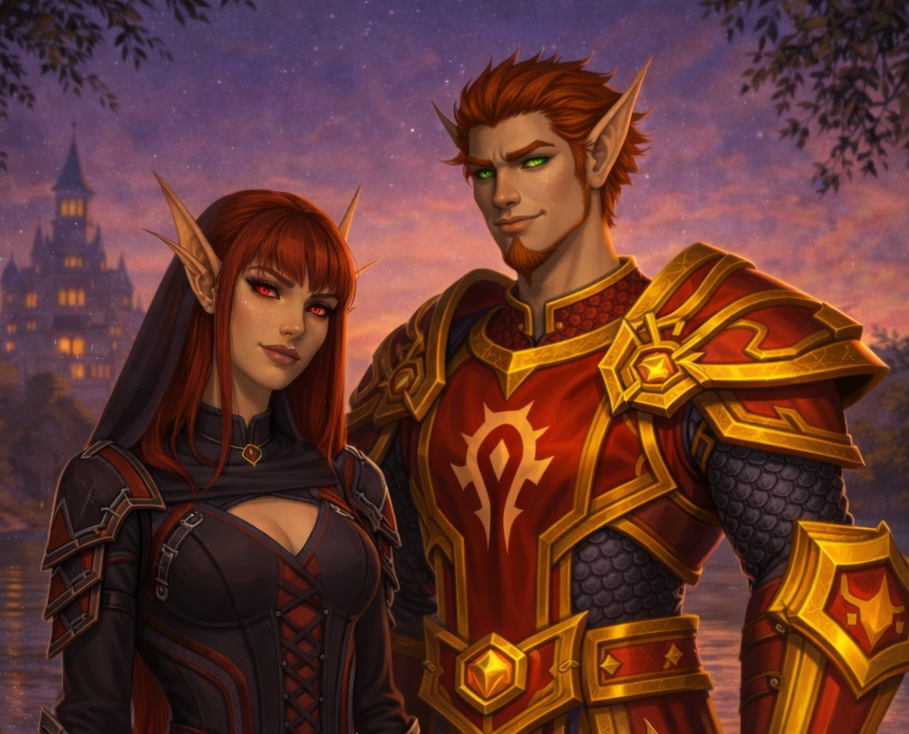
Keslana stood at the edge of the city with her bow slung low across her back, fingers idly tracing the fletching of an arrow she hadn’t loosed in days. Her armour bore the marks of her path — darker leathers, muted crimson, the quiet promise of precision rather than ceremony.
“Last chance,” Kespan said lightly beside her. “We could turn around. Pretend this is a very dramatic walk.”
Keslana didn’t answer right away.
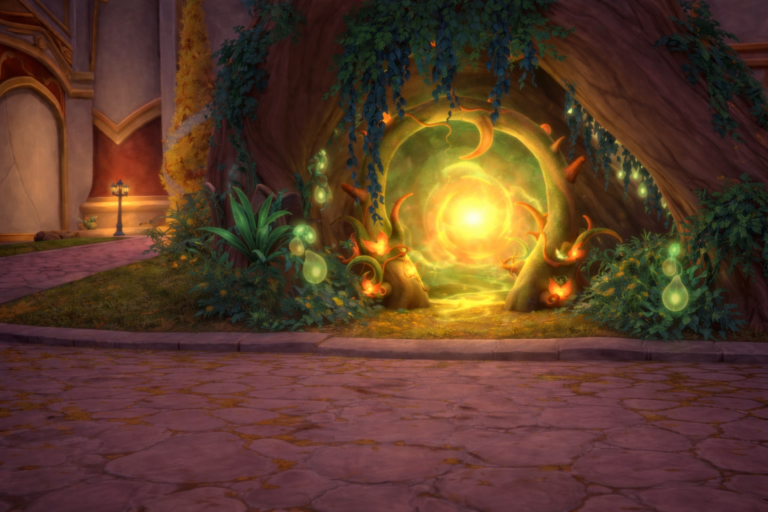
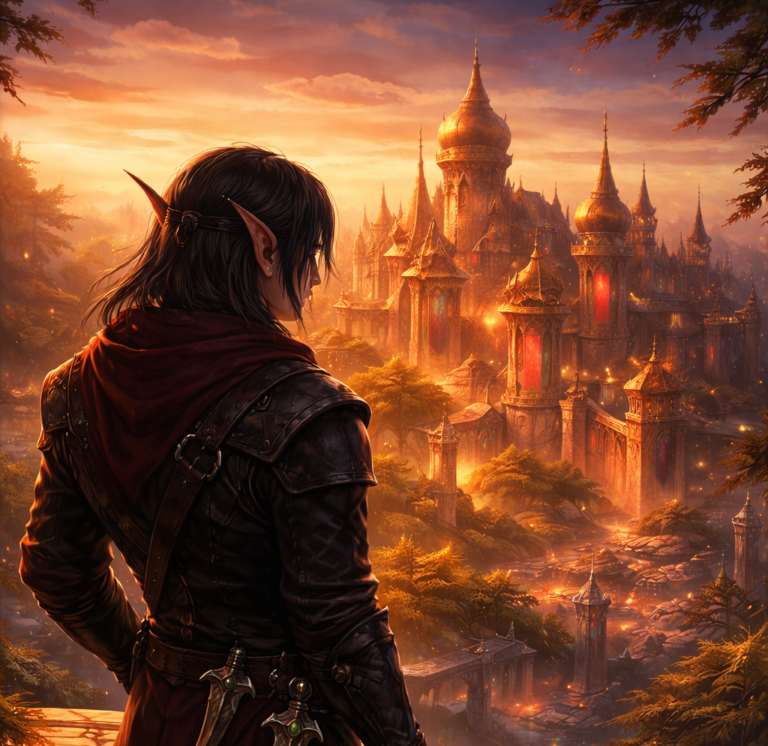
Silvermoon stretched behind them in all its polished defiance — spires catching the sun, banners stirring in a breeze that smelled faintly of incense and magic. Beautiful. Untouched. It looked exactly the way it was supposed to.
That was the problem. None of it belonged to them anymore. Not really.
She remembered standing in this same place weeks earlier, returning from a patrol along the Ghostlands. The guards at the gate had nodded her through without comment — eyes sliding past her armour, and one of them had even flinched when he saw the black-fletched arrows at her hip.
Dark Ranger, the whisper had followed her inside the walls — a name earned by choice, but never spoken kindly. Not an accusation. Not praise. Just fact.
She’d gone home that night and scrubbed her gear until her hands ached, as if she could wash the shadow from it. As if Silvermoon might accept her again if she tried hard enough.
It hadn’t. It never would.
She exhaled slowly and adjusted the bow at her back.
“You always say that,” she murmured. “Like if I hesitate long enough, the city will decide for me.”
Kespan smiled, but she caught the way his hand drifted closer to his shield, the way he angled himself just slightly toward her. Always ready. Always watching.
“Worth a try,” he said. “Silvermoon’s very good at convincing people to stay.”
She glanced at him then. “It’s good at pretending nothing’s changed.”
That sobered him.
For Keslana, it hadn’t been one moment. It was a collection of them — invitations that stopped arriving, conversations that ended when she entered the room, the way the Light felt thinner here now, like it no longer reached for her.
The final blow had been small. Trivial, even.
A younger ranger had asked her, voice careful, if it was true that she’d learned to shoot without breathing.
She realized, in that moment, that she would never stop being the story whispered in the margins of the city. Not because of what she had become, but because of what she had once been. The girl who had turned back. The girl whose father had followed.
“I don’t belong here anymore,” she said quietly.
Kespan didn’t argue. He never did when it mattered.
He just nodded once. “I know.”
She hesitated, fingers tightening around the strap of her bow. “You don’t have to come.”
She still remembered the weight of her father’s hand on Kespan’s shoulder — bloodied, trembling, and resolute.
Take care of her, he had said.
As if Kespan had ever needed to be told to do so.
He looked to her.
“I know,” he said gently. “But you make terrible choices when you think you’re alone.”
A familiar heat flared in her chest — irritation, gratitude, love — all tangled together.
“I manage,” she said.
He smiled, soft and stubborn. “You survive. There’s a difference.”
For a moment, the city behind them faded — the noise, the beauty, the expectations. There was just the road ahead, and the brother who had always stood between her and the worst of the world.
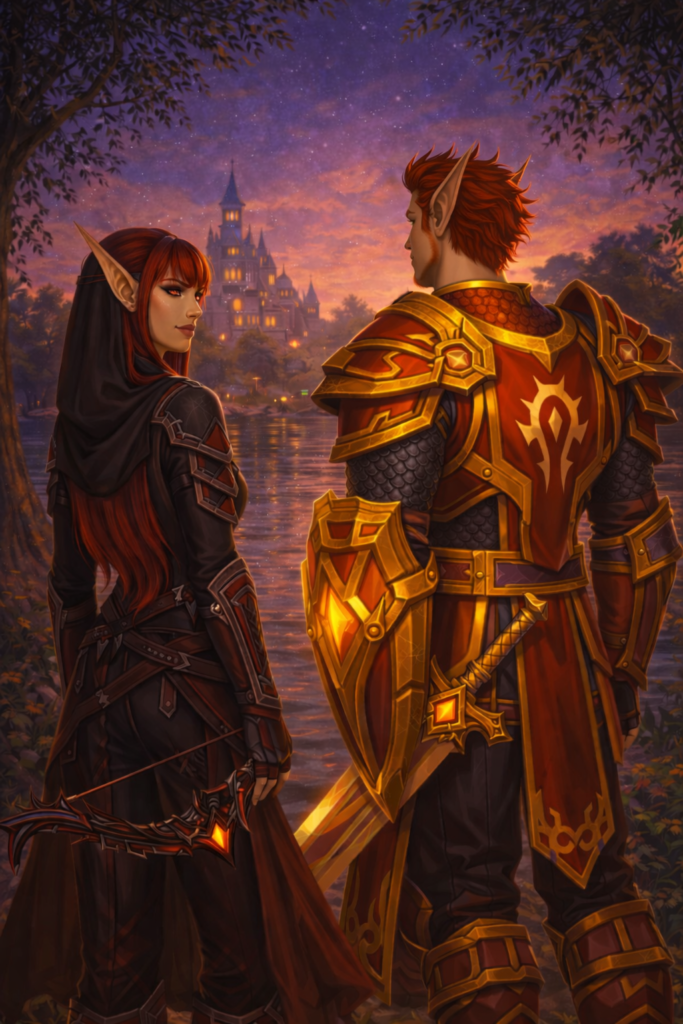
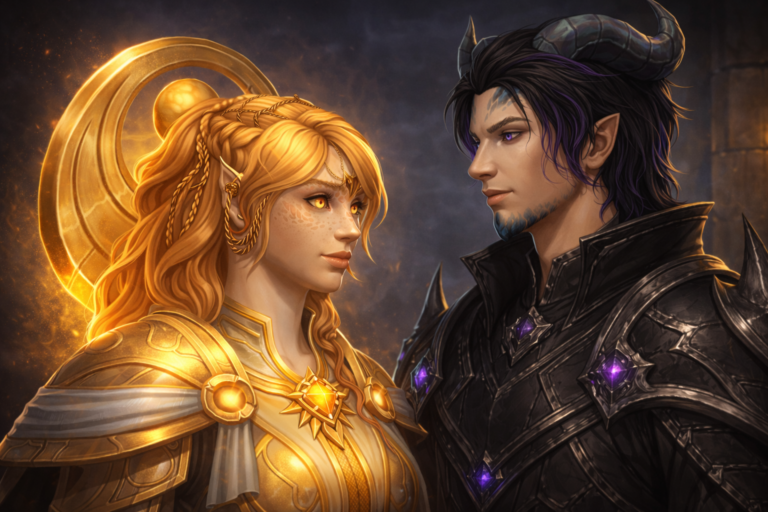
Kespan looked every bit the paladin. His polished plate armour catching the sun, tabard straightened with habitual care, the Light resting easily around him like a second breath. Where she had learned to survive in shadows, he had chosen to stand where everyone could see him.
Light and shadow. Shield and arrow. Two answers to the same grief — choosing, at last, to move forward.
Behind them lay the memory of a house that no longer stood; its stones scattered long ago, its warmth reduced to fragments she carried more easily than she admitted. A family name spoken now only between the two of them, carefully, as if it were fragile.
The invasion of Quel’Thalas had taken what it could in blood and fire — time had taken the rest.
There was nothing left to guard. Nothing left to avenge that hadn’t already been bled dry. There were only echoes, and expectations she no longer fit inside.
Keslana turned her gaze forward, to the road winding away from the city and toward lands that did not know her name. Toward places where she would not be asked to explain what she had become.
“Where first?” she asked.
Kespan shrugged, casual as ever, though his attention never wavered from her. “Somewhere we can blend in and doesn’t look at you like you’re already a ghost.”
She felt the truth of it settle — not sharp, just tired. Like something she had been carrying for so long she’d forgotten when it first began to weigh.
She huffed, a weak sound that barely passed for a laugh. “Good luck,” she said. “You glow.”
“Can’t help it,” he replied. “It’s a curse.”
She rolled her eyes, and this time the smile that followed reached them — brief, familiar, grounding.
For a moment, the old rhythm returned: the quiet language beneath the jabs and smirks. Two children shaped by the same loss, grown into different answers, standing on the edge of what came next.
Keslana adjusted her bow once more and began to walk down the road.
Kespan fell into step beside her, without hesitation.
Whatever awaited them beyond Silvermoon — light or shadow, redemption or reckoning — they would face it together.
As they always had.